Futuristic HUD Interface Elements: Designing for Sci-Fi and Interactive Experiences
As the demand for immersive digital experiences grows, the role of visual design in creating believable, functional, and aesthetically compelling interfaces becomes increasingly critical. Among the many tools available to designers, Futuristic HUD Interface Elements have emerged as a popular choice for developers and artists working on sci-fi games, tech concept visuals, and futuristic UI prototypes. These design kits offer a structured yet flexible foundation for building heads-up displays (HUDs) that communicate digital depth, interactivity, and high-tech aesthetics.
Understanding Futuristic HUD Interface Elements
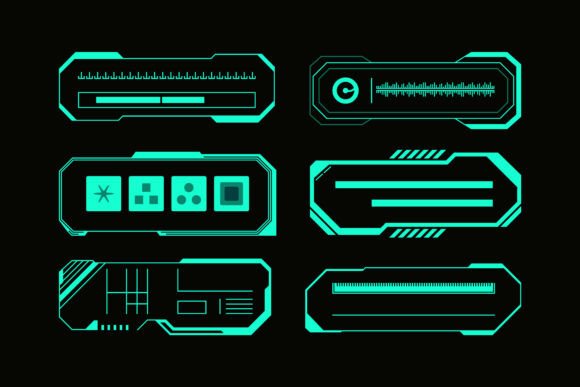
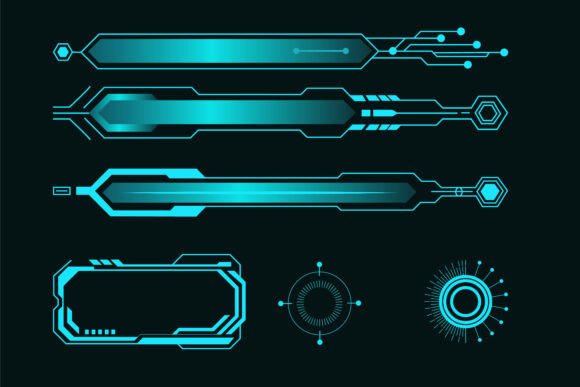
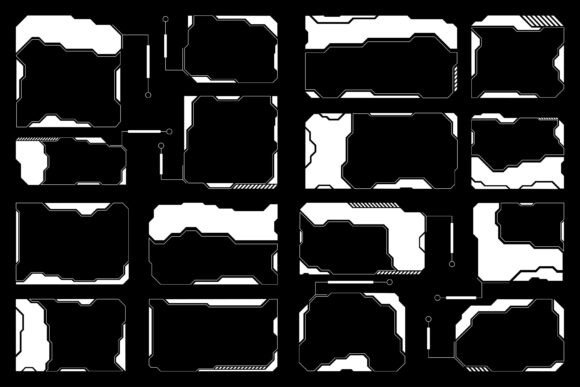
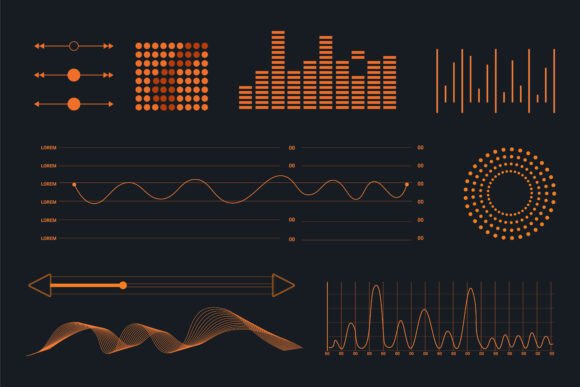
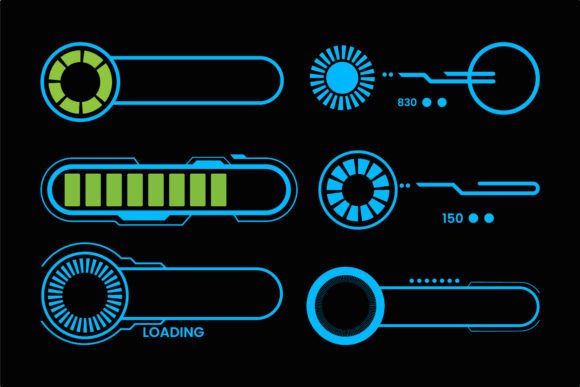
The Futuristic HUD Interface Elements collection is a set of design assets tailored for creating digital overlays commonly seen in science fiction contexts. These elements include modular panels, data readouts, control indicators, and neon-lit components that evoke a sense of advanced technology. Unlike generic UI kits, these are specifically crafted to support a futuristic visual language, often incorporating glowing lines, digital fonts, and layered transparency effects that mimic holographic or augmented reality displays.
What sets this collection apart is its technical flexibility. Each component is built as a fully editable vector design, allowing users to adjust scale, color, and structure without loss of quality. With support for 100 color customizations and compatibility across design software, it enables creators to adapt the interface to different environments, themes, or branding requirements. The inclusion of source files in EPS format ensures that users can dive deep into the construction of each element, making it a valuable asset for both prototyping and final implementation.
Comparing with Alternative Design Approaches
Designers have several options when it comes to UI and HUD creation, ranging from pre-built UI frameworks to custom-built interfaces from scratch. Traditional UI kits often focus on usability and consistency across platforms, emphasizing clarity and accessibility. In contrast, Futuristic HUD Interface Elements lean into visual storytelling and thematic coherence, making them more suitable for environments where aesthetics and immersion are key.
For example, a game developer working on a cyberpunk-themed title may find that generic UI kits lack the visual flair needed to match the game's tone. In such cases, using a specialized kit like Futuristic HUD Interface Elements can save time while ensuring the interface aligns with the game’s visual identity. Alternatively, a designer with strong technical skills may opt to build a custom HUD from scratch, allowing for full control over every detail. However, this approach requires more time and expertise, which may not be feasible for smaller teams or solo developers.
Strengths and Practical Applications
One of the main advantages of using Futuristic HUD Interface Elements is its efficiency. Because the elements are pre-designed and modular, they can be quickly assembled into functional layouts. This is particularly useful during early prototyping stages, where visual fidelity and rapid iteration are important. The ability to resize and modify components without quality loss also makes it easier to adapt the interface for different screen sizes or resolutions.
Another benefit is the aesthetic cohesion the kit provides. The neon digital components and sharp geometric shapes are consistent with the visual language of sci-fi interfaces seen in films, games, and concept art. This consistency helps maintain a unified look across different screens and interactive elements, contributing to a more immersive experience for the user.
- Game Development: Ideal for sci-fi or cyberpunk games requiring a high-tech interface.
- Concept Art: Useful for visualizing future tech interfaces in storyboards or digital illustrations.
- UI/UX Prototypes: Can be used to create interactive mockups for upcoming tech products or digital dashboards.
Tradeoffs and Limitations
Despite its advantages, the Futuristic HUD Interface Elements collection is not without limitations. Its specialized nature means it may not be suitable for projects requiring a more minimalist or realistic interface. For instance, a medical simulation or a productivity app would likely benefit more from a clean, functional UI that prioritizes readability over visual flair.
Additionally, while the kit offers a wide range of customizable options, users may still find the need to tweak or extend certain elements beyond what’s provided. This requires a certain level of design proficiency, especially when working with vector files or adjusting color schemes to match a specific project palette. Those without prior experience in graphic design tools may find the learning curve steeper than expected.
When to Choose Futuristic HUD Interface Elements
The decision to use Futuristic HUD Interface Elements should be based on the project's visual requirements and development timeline. If you're working on a sci-fi themed project and need a polished, cohesive interface quickly, this collection can significantly streamline your workflow. It's particularly well-suited for:
- Indie game developers looking to create visually rich interfaces without extensive design work.
- Concept artists and illustrators needing to present high-tech visuals in a professional format.
- UI designers prototyping futuristic dashboards or AR interfaces for tech demonstrations.
When Another Option May Be Better
Conversely, if your project requires a more neutral or functional design language, or if you need full control over every visual element, alternative approaches may be more appropriate. Custom-built interfaces or general-purpose UI kits might offer greater flexibility for projects that don’t fit within the sci-fi aesthetic. Additionally, for applications where accessibility and usability are paramount—such as enterprise software or educational platforms—a more conventional design approach may be necessary to ensure clarity and ease of use.
Making an Informed Design Decision
Ultimately, the choice between Futuristic HUD Interface Elements and other design tools depends on the specific needs of the project and the skills of the team involved. For those working in sci-fi or speculative tech design, this collection provides a strong foundation that balances visual appeal with practical usability. However, it’s important to evaluate the long-term adaptability of any design asset, especially when working on projects that may evolve over time.
By considering factors such as customization needs, design expertise, and intended audience, creators can make a more informed decision about whether Futuristic HUD Interface Elements will serve their project effectively or if another solution might be a better fit. As with any design tool, the goal is to enhance the user experience while maintaining creative and technical efficiency.